Engineering Empathy:
Valley Catholic Middle Schoolers Experience Compassion Through Real-World STEM Project
Eighth-grade students at Valley Catholic Middle School traded textbooks for prototypes to tackle a profound engineering challenge. The students designed life-changing mobility devices for rescue dogs with limited movement.
This ambitious, year-long STEM project, the Dog Mobility Project, transforms the classroom into a professional environment by pairing academic rigor with heartfelt community service.
The Dog Mobility Project launched in September 2025. The project began to grow when a few VCMS students discovered a story about an animal shelter in Gaza using recycled toys to build mobility devices for disabled animals. Their curiosity and compassion for those animals sparked the idea of exploring how design thinking could be applied to the challenges of mobility and care. Over time, that idea developed into the culminating portion of the Valley Catholic Middle School STEM program.
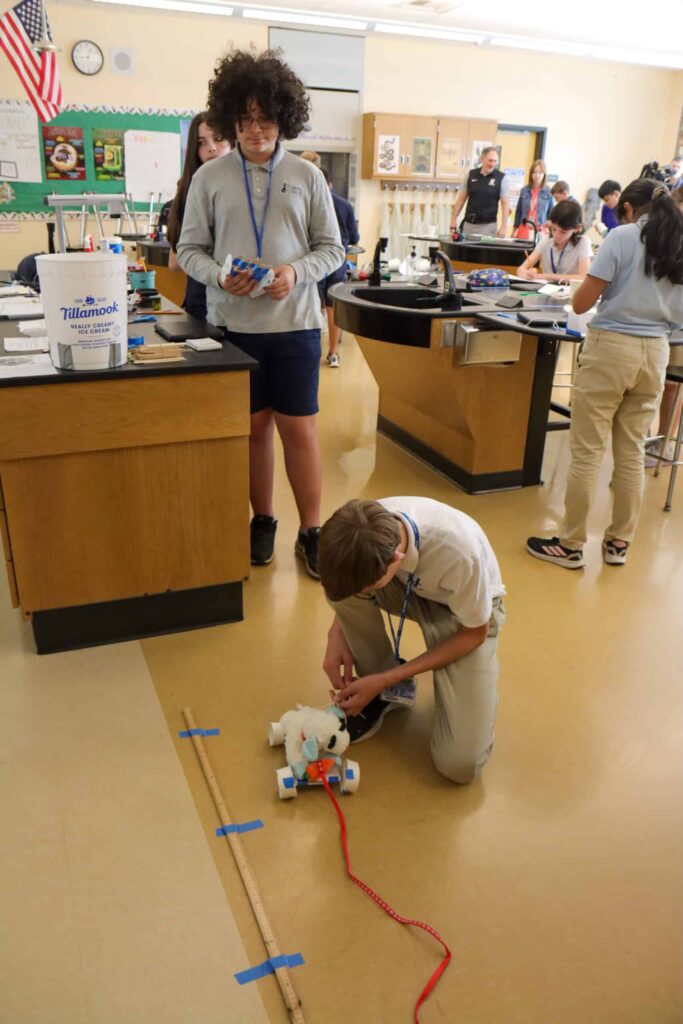
In fact, the concept was featured in local media coverage at the end of the 2024-25 school year. Reporters from KPTV’s Good Day Oregon, KATU, KOIN, The Oregonian, KXL Radio, Beaverton Valley Times, and the Portland Tribune came to witness the middle schoolers complete their STEM final last year.
The STEM final that year was based on the story of Ember, a 16-week-old Labradoodle whose back legs were paralyzed due to a spinal injury. During the final exam students built prosthetic prototypes for Ember out of recycled cups, string, straws and tongue depressors. That experience and the media attention affirmed for the students that their compassion can connect meaningfully with the wider community.
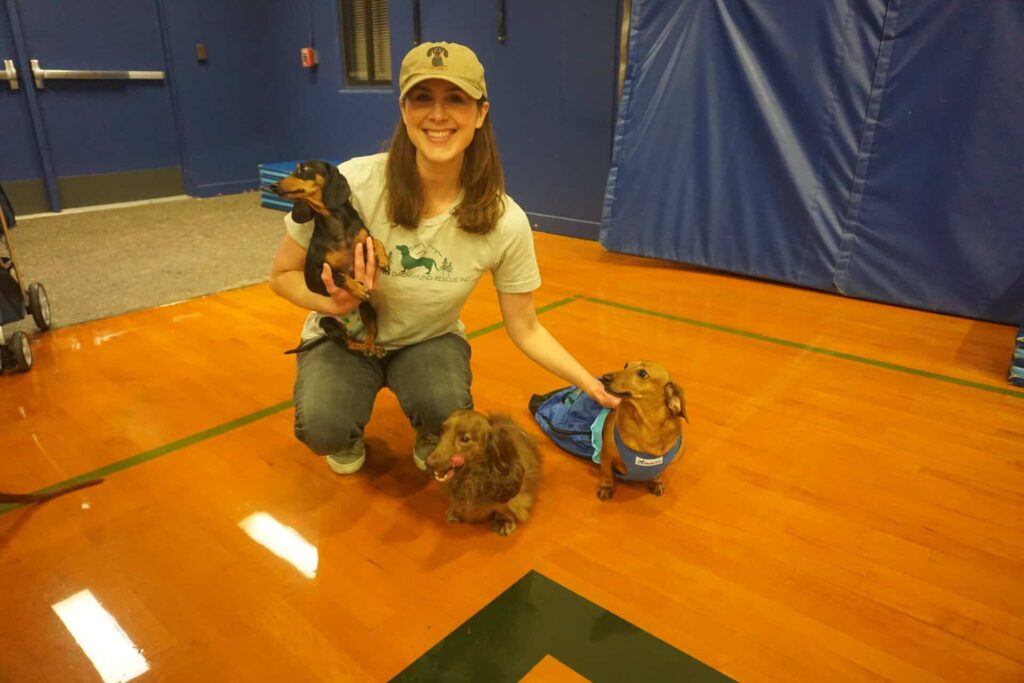
Eager to capitalize on that experience, those same students, now eighth graders, began working in structured “design firms” at the beginning of the 2025-26 school year. The students in each team took on the various roles of Project Manager, Design Engineer, Build Specialist and Marketing and Media Specialist. Their ultimate goal was to unveil custom-designed mobility devices for three special dogs in partnership with the Portland Dachshund Rescue.
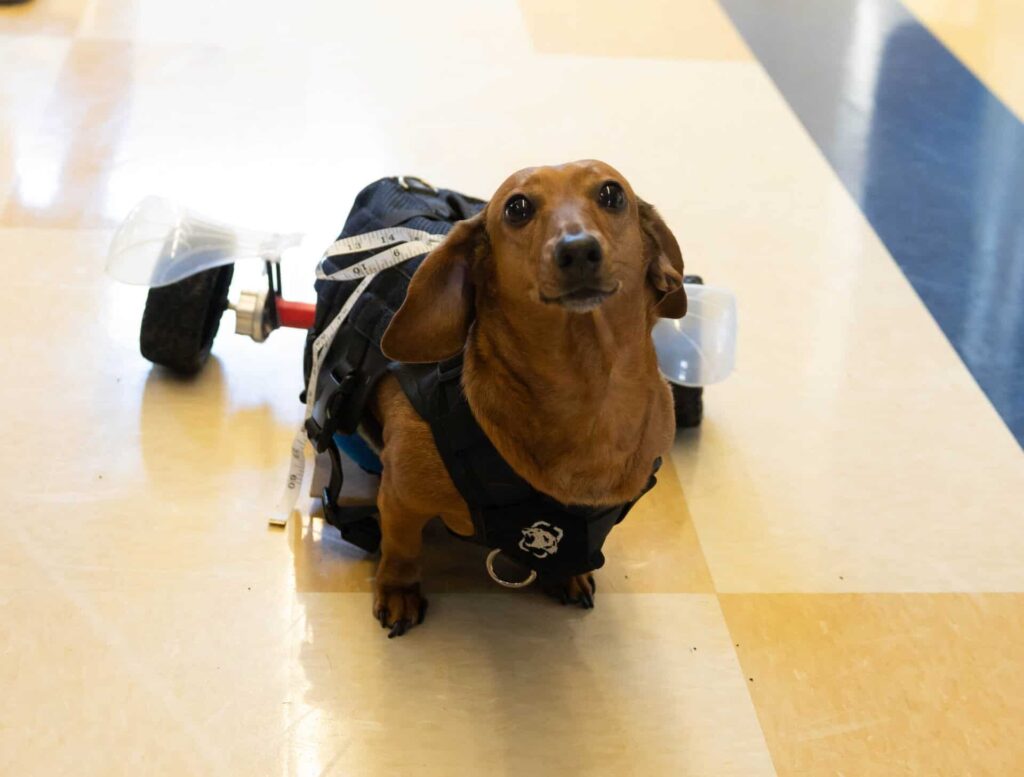
“The core of the Dog Mobility Project lies in blending engineering, design thinking, and storytelling to develop solutions that genuinely improve the lives of animals,” said Yin-Fang Lao, VCMS Director of Design Thinking. “By working with real dogs from the Portland Dachshund Rescue, the students move beyond theoretical problems and apply their learning to solve a tangible community need.”
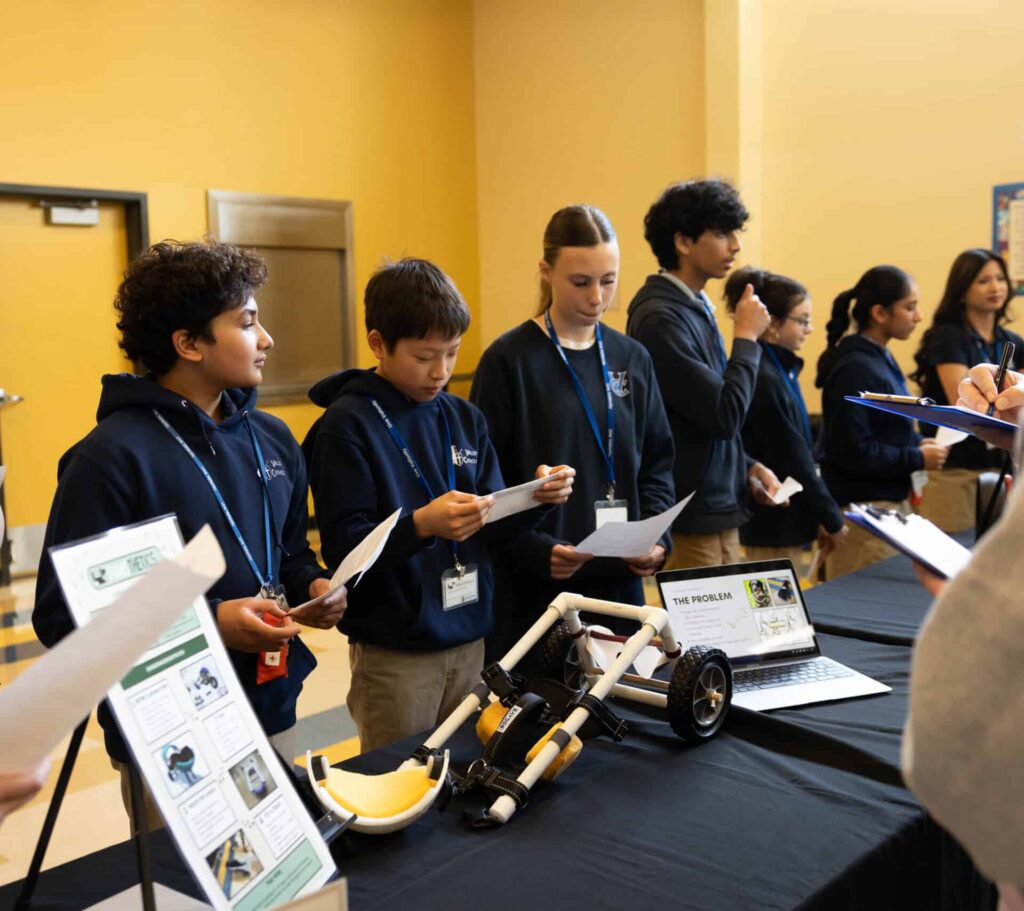
Throughout the entire project, the students worked through various feedback sessions. They shared their draft presentations and initial designs with their peers and teachers as well as a wide-range of business, engineering and marketing professionals in order to get feedback and continuously work to improve their designs. They also conducted two meetings with their assigned dachshunds to interact with their clients, get measurements and understand their specific needs.
The partnership with the Portland Dachshund Rescue is critical. It provides students with client feedback and allows them to see firsthand how their efforts make a powerful difference. The project emphasizes that students are making a tangible difference in the lives of animals in need while gaining essential hands-on STEM skills.
The compassion cultivated through the partnership with Portland Dachshund Rescue serves as a tangible link between the students’ skills and their ability to serve their community. April Zimel, representing the Portland Dachshund Rescue, says “The Portland Dachshund Rescue is thrilled to partner with these amazing students. I have enjoyed being a first-hand witness to their work and our dogs, Maple, Lucy and Hank absolutely loved the attention and care they received.”
Innovation Through Design and Iteration
Rather than relying on traditional assessments, the project requires students to engage in iterative design, research, prototyping, and testing. It is a process that mirrors professional engineering environments. The experience is intentionally structured to embrace failure as a step toward innovation.
“The students are learning to be engineers and researchers. They define problems, design and test prototypes, and iterate to improve their prosthetics to help solve real community challenges,” explained Yin-Fang. “This real-world application is what sets the course apart. The project is designed to move beyond traditional multiple-choice exams by creating a scenario where students feel they are making a genuine difference in the life of an animal and ultimately in their community.”
To foster innovation and sustainability, the student teams worked from limited budgets and were required to build their prosthetics using recycled and upcycled materials. This constraint pushed creativity and added a layer of complexity to the design challenge. Working within these very real constraints ensured that the students gained valuable problem-solving and sustainability skills.
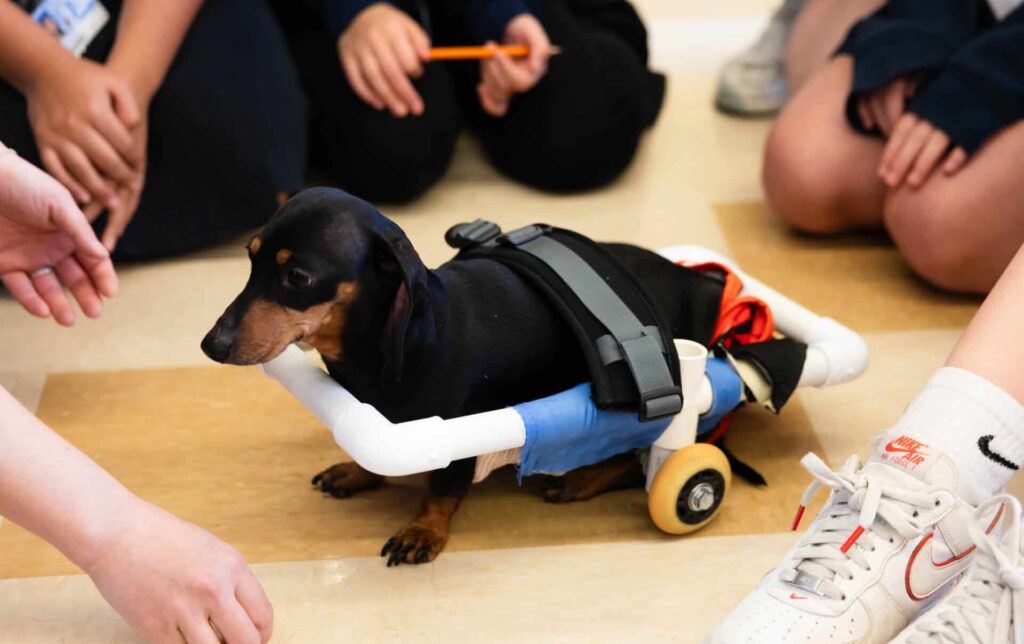
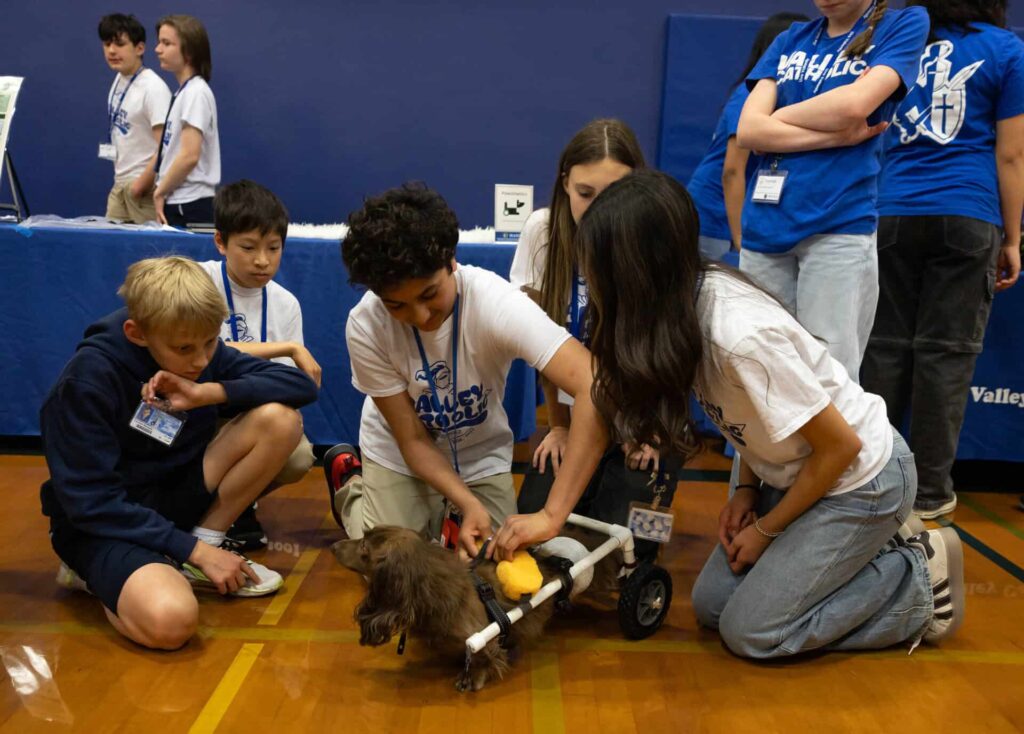
For the middle schoolers, the practical applications of the project elevated the meaning of their studies.
“The hands-on building process allowed us to experiment and see how different materials worked together,” said a VCMS 8th grader who served as Project Manager for her team. “The communication part was also very important for us. We really had to learn how to best communicate as a team so we could work with each other and Maple (their dachshund) better.”
This focus on product and purpose ensures that the important skills the middle schoolers learn — leadership, problem-solving, teamwork and communication — are transferable as they move into high school and ultimately beyond the classroom.
The student experience is one of high challenge and high reward. It teaches critical thinking and collaboration, while cultivating empathy and innovation. The Dog Mobility Project is a powerful example of what happens when students have the opportunity to solve real problems for our community.
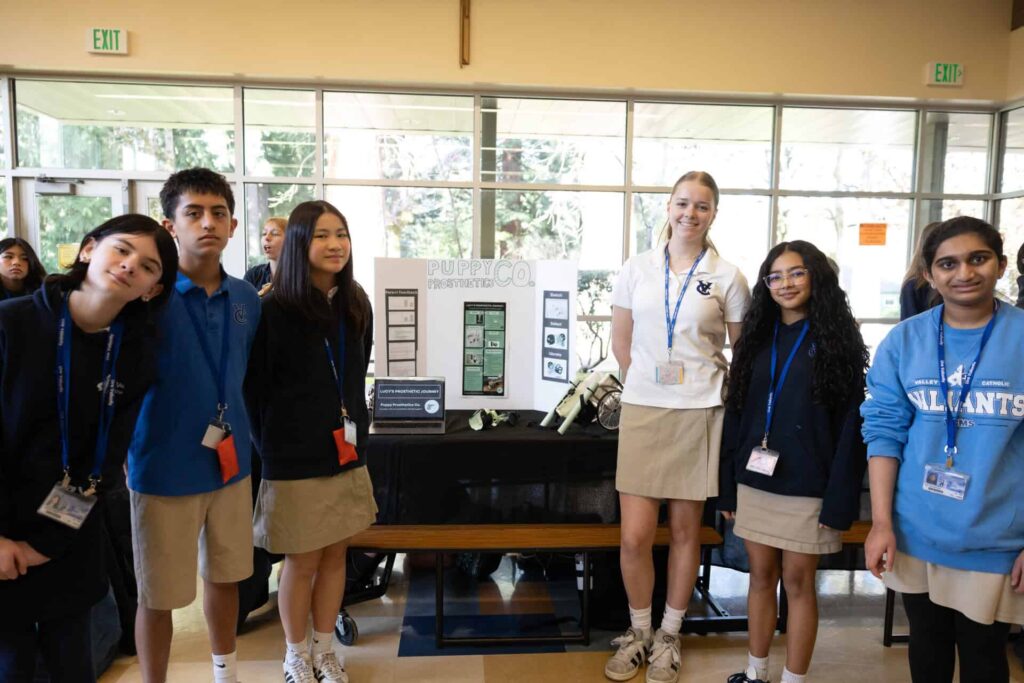
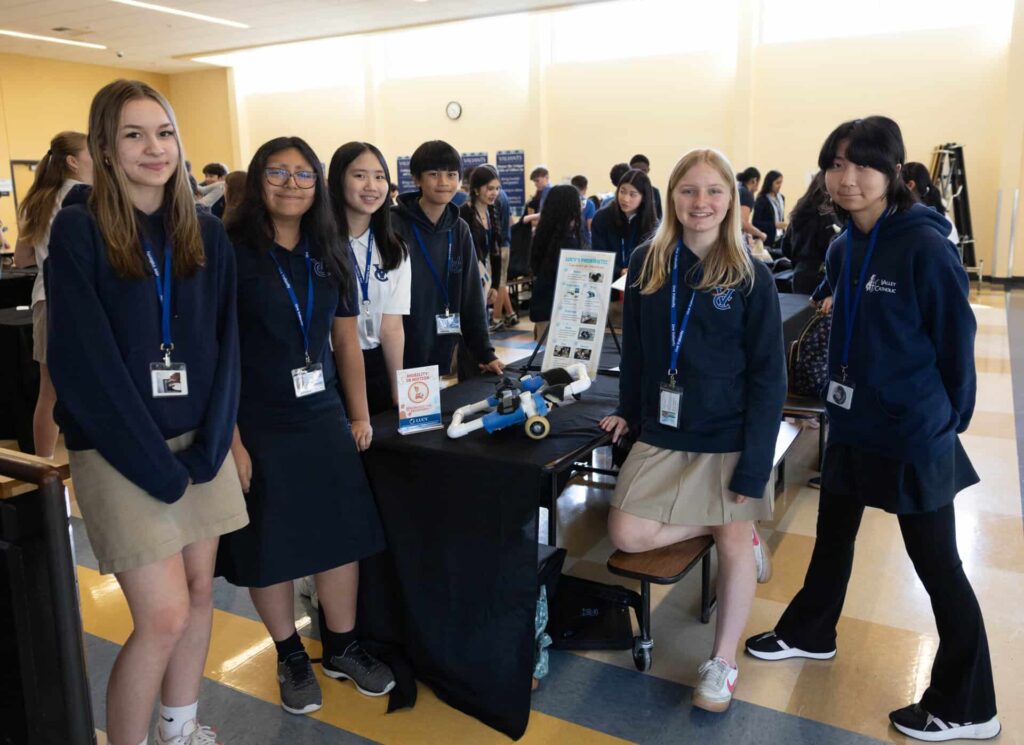
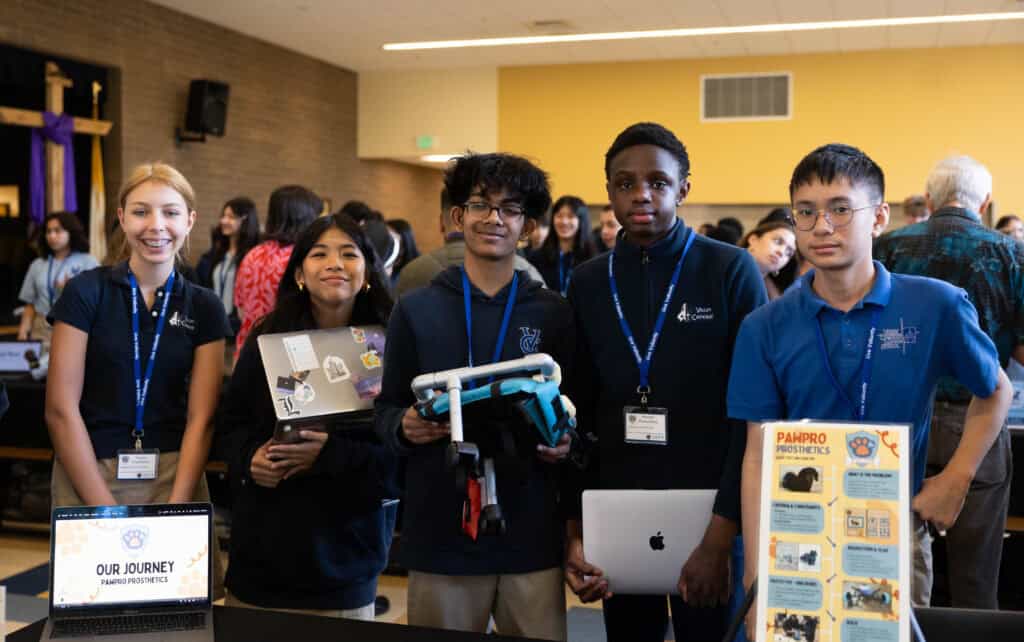
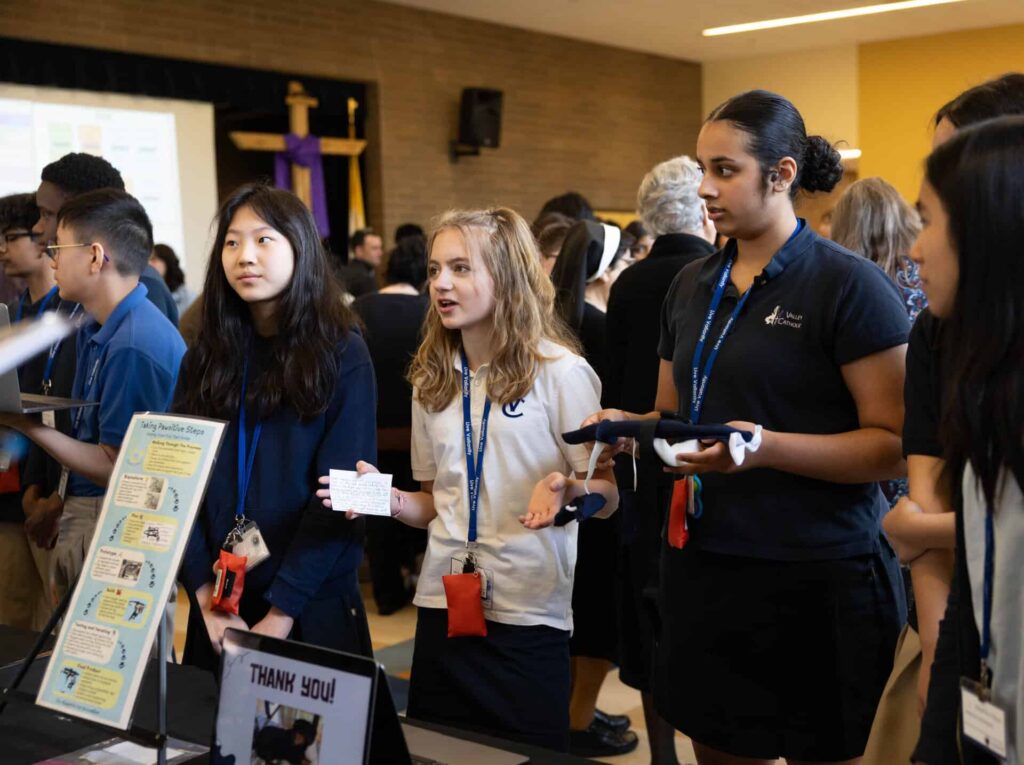
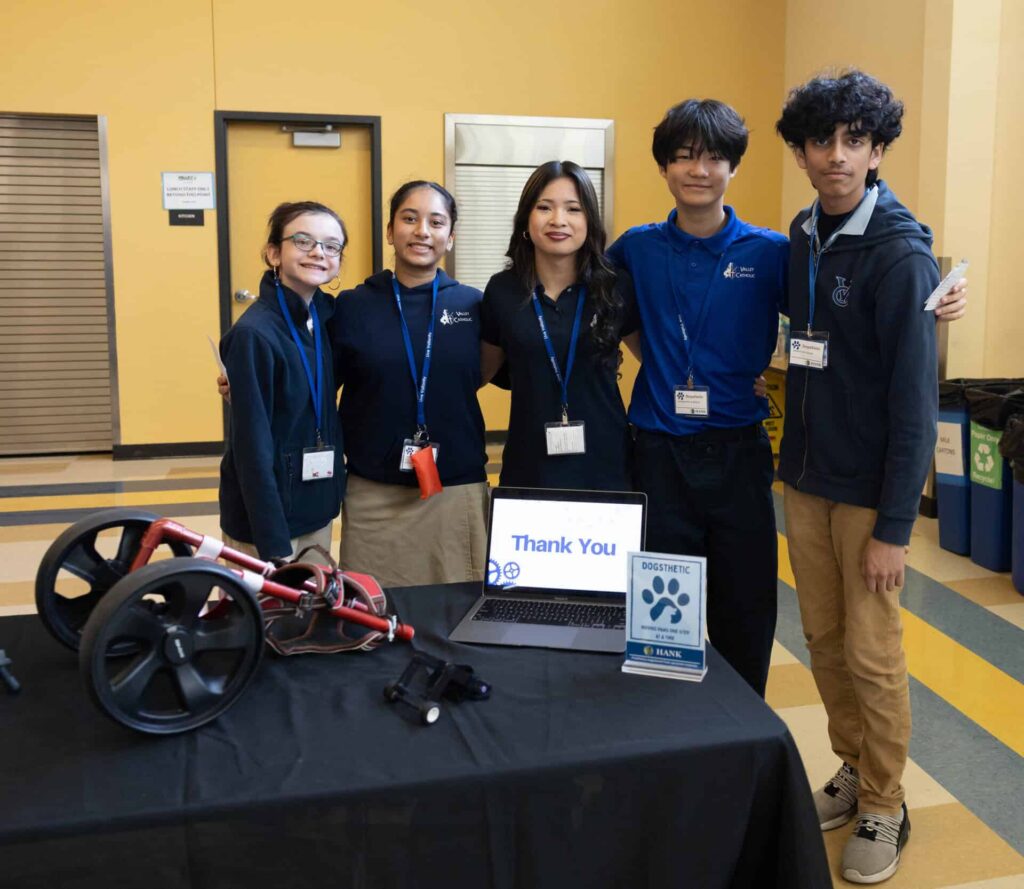
The Dog Mobility Project culminated in a special showcase on April 15. The entire middle school joined together in the Eagle’s Gym where each of the 15 design teams set up their marketing displays and showed-off their designs. It was extra special for the top three teams (one for each dachshund) as they presented their mobility device to their peers, teachers, parents and the Sisters of St. Mary of Oregon. The winners, Pawsitive Steps, Pawsthetics, and True Tail were all smiles and all professional as they shared their research and designs with the captivated audience.
The Portland Dachshund Rescue joined in the showcase event and even brought a couple of additional dogs to spend some time with the students and attendees. Each of the pups thoroughly enjoyed the loving care and all of the attention as they tried on the devices and soaked up the gentle petting and extra treats.
Continuing a Legacy of Excellence and Service
The Dog Mobility Project is more than a successful one-time project. It is a direct reflection of the Sisters of St. Mary of Oregon’s (SSMO) enduring legacy of innovative and excellent education.
Valley Catholic School is dedicated to creating life-long learning experiences that are real and purposeful. Valley Catholic Middle School is an accredited STEM school affiliated with the Sisters of St. Mary of Oregon, and its curriculum reflects a longstanding tradition of academic excellence and service. This modern design thinking curriculum emphasizes the middle school’s four core academic pillars: Research, Writing, Presentation, and Product. It is a foundational example of the Sisters’ dedication to equipping students to excel academically and to become future-ready leaders.
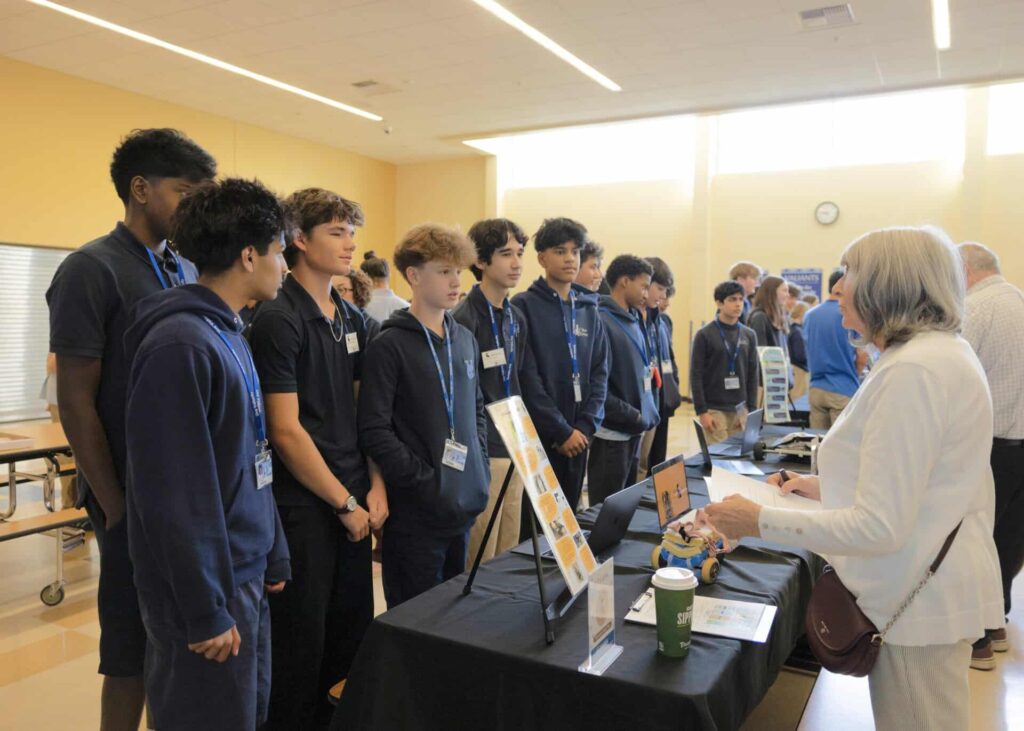
By engaging in challenging cross-curricular projects, Valley Catholic students are developing technical skills, empathy, leadership, and the life-long understanding that their ideas and work make a meaningful difference. Ultimately, school administrators and teachers hope the project provides students with a better perspective on how their studies can help others in the future.
Through innovation, collaboration, and a commitment to service, the Valley Catholic Middle School Dog Mobility Project exemplifies how the Sisters of St. Mary of Oregon legacy continues to shape education, producing not just engineers and researchers, but future leaders driven by compassion and purpose.